Key Takeaways
- Travelling from Dubai to Istanbul by train may sound like an idea from another age, but new railway plans across the Middle East could make it possible in the future.
- At the centre of the plan is the historic Hejaz Railway, a railway network first developed during the Ottoman period more than 120 years ago.
- In June 2026, Turkey and Saudi Arabia signed agreements covering railway connectivity and logistics.
Travelling from Dubai to Istanbul by train may sound like an idea from another age, but new railway plans across the Middle East could make it possible in the future.
At the centre of the plan is the historic Hejaz Railway, a railway network first developed during the Ottoman period more than 120 years ago. Construction started in 1900, and the line eventually connected Damascus with Medina. It was designed to improve transport across the region and make travel easier for pilgrims. Large parts of the railway were later damaged during the First World War and never fully restored.
Now, Turkey, Saudi Arabia, Jordan and Syria are working on plans to bring the route back to life as part of a much larger regional transport network.
In June 2026, Turkey and Saudi Arabia signed agreements covering railway connectivity and logistics. The proposed route would connect Saudi Arabia with Turkey through Jordan and Syria. Turkish officials have said the project could be completed within three to four years, although major construction, funding and security challenges still need to be addressed.
One of the biggest missing sections is around 400 kilometres between Syria and Jordan. Turkey is also expected to support the rebuilding of railway infrastructure connecting the Turkish border with Aleppo and Damascus.
The new railway would not only carry passengers. It could become an important trade route for goods, energy and other cargo travelling between the Gulf, the Levant, Turkey and Europe. Recent disruption to shipping routes in the region has also increased interest in land-based transport alternatives.
For the UAE, the project becomes particularly interesting when combined with the expansion of Etihad Rail and the wider GCC railway network. The long-term vision is to connect more Gulf countries, including the UAE, Kuwait, Qatar and Oman, to the regional railway corridor.
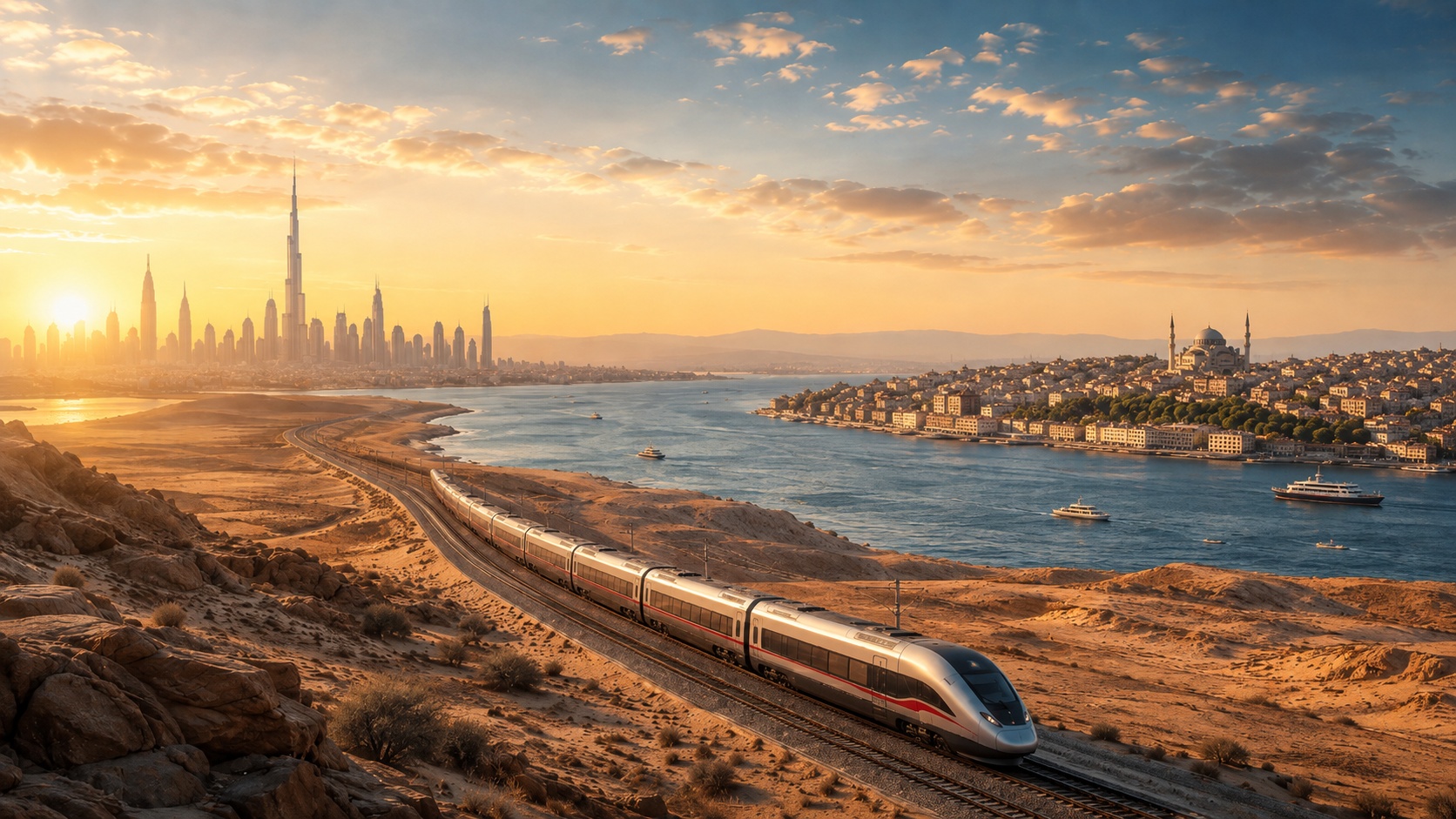
If these national networks are eventually linked together, a much bigger rail corridor could emerge. In theory, a train could travel from the UAE through Saudi Arabia, Jordan and Syria before reaching Turkey and connecting with Istanbul and the European rail network.
However, this does not mean travellers will soon be able to book a direct Dubai-to-Istanbul train ticket. The idea depends on several separate railway projects, cross-border agreements, new infrastructure and common technical standards.
Still, the revival of the Hejaz Railway shows how an old transport idea could find a new purpose. What was once a historic railway could eventually become part of a modern corridor connecting the Gulf with Turkey and Europe.
For Dubai residents, the possibility of reaching Istanbul by rail remains a future vision — but it is becoming more realistic than it has been for decades.
Sources