Key Takeaways
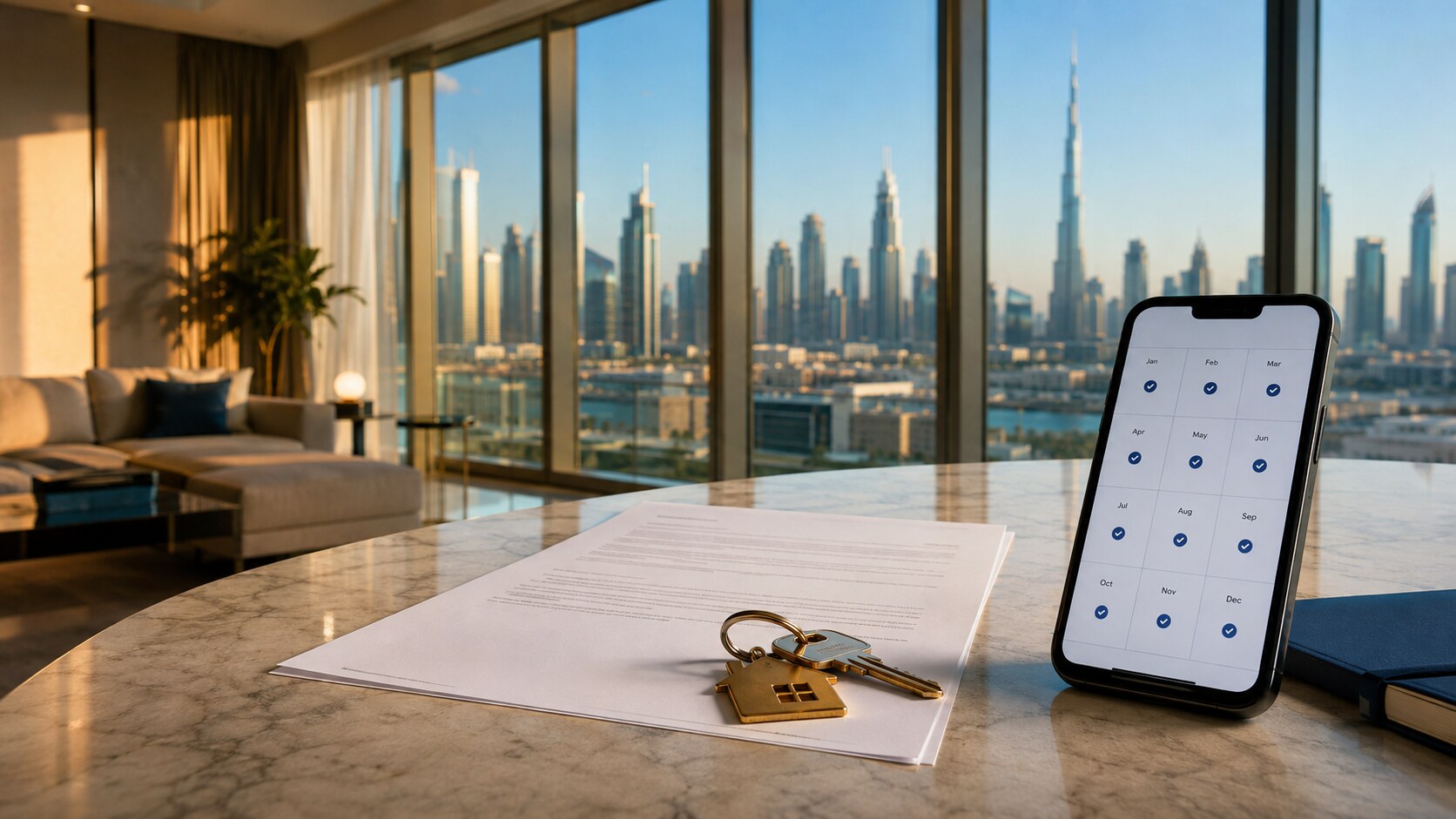
- Dubai’s rental market could be approaching an important structural change as the emirate moves gradually away from large annual rent cheques toward more flexible monthly payment options.
- The Dubai Land Department has already introduced its Flexi Rent initiative, which allows participating property-management companies to offer monthly, quarterly or semi-annual payments on eligible residential, office and retail properties.
- However, Flexi Rent does not automatically apply to every rental property in Dubai.
Dubai’s rental market could be approaching an important structural change as the emirate moves gradually away from large annual rent cheques toward more flexible monthly payment options.
The Dubai Land Department has already introduced its Flexi Rent initiative, which allows participating property-management companies to offer monthly, quarterly or semi-annual payments on eligible residential, office and retail properties.
However, Flexi Rent does not automatically apply to every rental property in Dubai. Participation is voluntary, and each approved company decides which eligible or vacant units to include and what payment options to provide. Dubai Land Department
A New “Rent Now, Pay Later” Service
A report published on 13 August 2026 says the Dubai Land Department is preparing a separate bank-backed “Rent Now, Pay Later” service, expected to launch in September 2026.
Under the proposed model, a participating local bank would pay the annual rent to the landlord upfront. The tenant would then repay the bank in monthly instalments over a period of up to 12 months, reportedly without interest.
This could offer tenants the convenience of paying rent in a way that is closer to how monthly salaries are received, while landlords continue to benefit from receiving their rent upfront.
However, the final details have not yet been officially announced. The participating bank, tenant eligibility requirements, processing fees, approval process and property coverage remain unclear.
For this reason, “interest-free” should not yet be presented as “completely free.” Tenants may still face administration, processing or financing-related charges once the final terms are published.
Why This Matters to Tenants
Dubai’s traditional rental system often requires tenants to provide one, two or four large cheques. Even residents with good monthly incomes can find it difficult to pay a significant portion of their annual rent in advance.
Monthly payments could reduce this upfront financial pressure and allow tenants to consider homes that better reflect their actual monthly affordability.
It may also make moving to Dubai easier for new residents who have sufficient income but have not yet built up enough savings to cover a large initial rent payment, security deposit, agency commission and moving expenses at the same time.
The service would not necessarily make rent cheaper, but it could make the same rent easier to manage.
What It Could Mean for Landlords
For landlords, the proposed structure could combine flexibility for tenants with greater payment security.
If the bank pays the annual rent upfront, the landlord may avoid the uncertainty of collecting monthly payments directly from the tenant. The bank would handle the repayment process and potentially assume much of the related credit and collection risk.
Properties offering approved monthly payment options could also attract a larger tenant pool, lease faster and achieve stronger tenant retention. Units managed by participating companies may therefore gain an advantage over comparable properties that still require large advance cheques.
However, the final structure will determine whether landlords receive the full rent without deductions or whether bank and service fees reduce their net income.
The Possible Effect on Dubai Rents
Flexible monthly payments could support occupancy across Dubai, particularly in communities popular with salaried professionals and families.
At the same time, easier payment terms may allow tenants to manage higher annual rents. This could sustain rental prices that might otherwise face downward pressure because of affordability constraints.
In other words, monthly payments improve cash flow, but they do not automatically improve value. A property does not become affordable simply because the payment is divided into smaller instalments.
Tenants must still evaluate the total annual rent and all related costs. Investors must continue to examine service charges, maintenance expenses, vacancy risk and the property’s actual net rental yield.
What Investors Should Watch
The proposed service could represent another step in Dubai’s transition from cheque-based leasing toward a more modern and structured rental-payment system.
For investors, the most important questions will be:
- Which bank or financial institutions will participate?
- What credit score, salary or employment requirements will apply?
- Will tenants or landlords pay processing fees?
- Will individual landlords be eligible, or only approved property managers?
- Will the service cover all residential properties or selected units?
- What happens if a tenant misses a monthly payment?
- Will the landlord’s payment be fully guaranteed?
The answers will determine whether this becomes a major market-wide change or remains a limited financing product available only to selected tenants and properties.
Monthly rent payments could make Dubai’s rental market more accessible and convenient. They could also improve occupancy, reduce collection risk and give participating properties a stronger leasing advantage.
But investors and tenants should wait for the official terms before assuming that zero interest means zero cost.
The real significance is not simply that annual rent may be paid monthly. It is that Dubai could be building a new rental structure in which tenants gain payment flexibility while landlords continue receiving secure, upfront income.
Sources