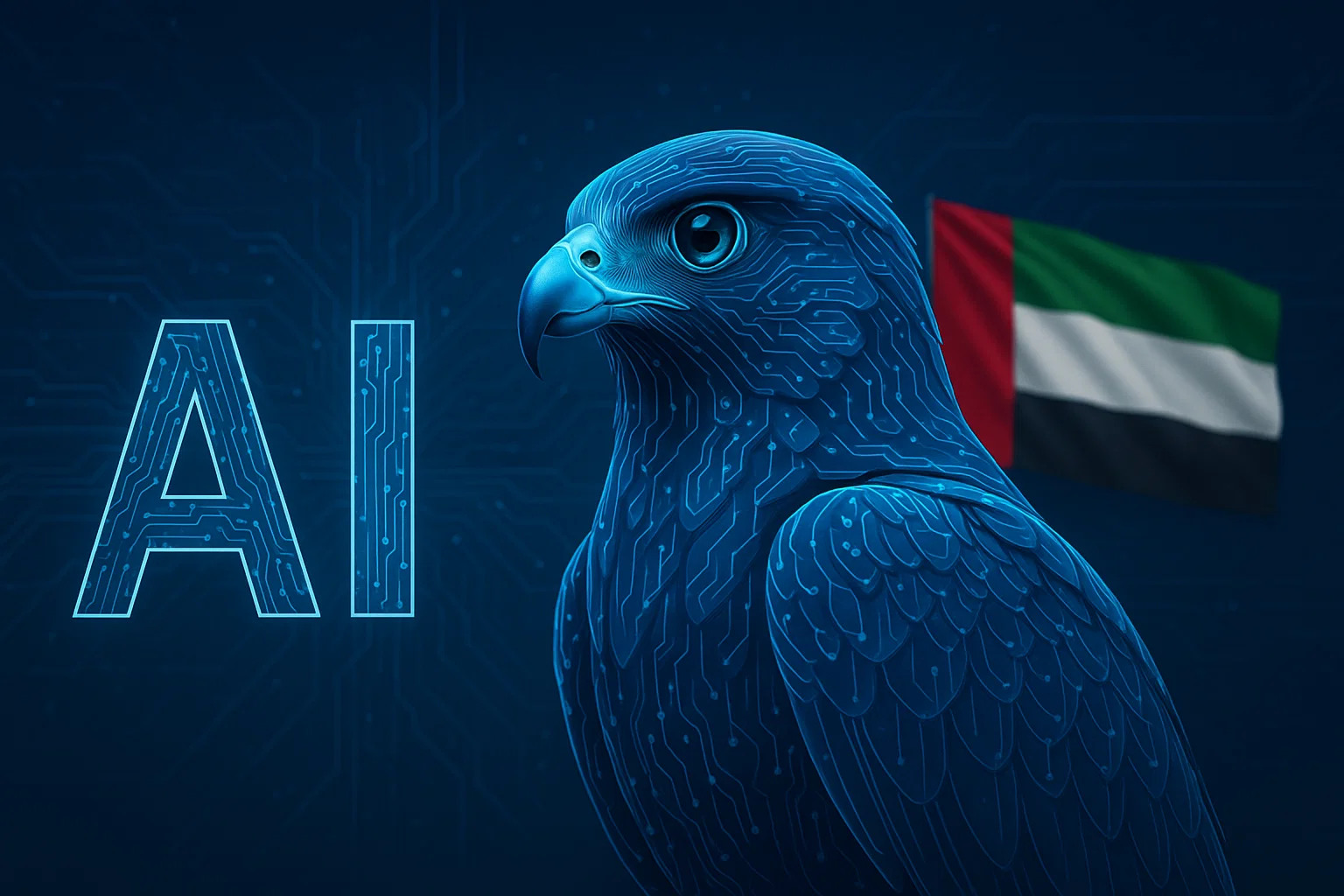
In a move that marks a strategic transformation in the landscape of artificial intelligence in the Arab world, the Technology Innovation Institute, affiliated with the Government of Abu Dhabi, has launched an advanced language model named “Falcon Arabi”. This initiative is part of the UAE’s broader efforts to solidify its leadership in technology and linguistic innovation across the Middle East and beyond.
A Digital Arab Renaissance Rooted in Language
Language is a vital pillar in building effective artificial intelligence systems, forming the foundation of human-machine interaction. Given that Arabic is among the most complex and diverse languages—with its rich tapestry of regional dialects—developing a model capable of accurately understanding and processing Arabic represents a major scientific breakthrough.
“Falcon Arabi” has been trained on massive datasets comprising both Modern Standard Arabic and regional dialects, granting it exceptional contextual understanding and the ability to engage with Arabic-speaking users with unprecedented precision and fluency.
Technical Excellence in a Compact Size
What makes this model particularly notable, according to the Technology Innovation Institute, is that it matches or even surpasses the performance of other models that are ten times larger in size. This reflects advanced engineering in model architecture and superior training strategies, paving the way for widespread, cost-efficient deployment with reduced computational requirements.
In addition, the institute launched another model, “Falcon H1”, a lightweight version designed to compete with offerings from global tech giants like Meta and Alibaba. Initial results show that Falcon H1 outperforms its peers in the same category, underscoring the UAE’s capability to enter the global AI race with confidence and competitiveness.
Multiple Applications and Promising Horizons
“Falcon Arabi” is expected to enhance a wide range of applications including translation services, text generation, media content analysis, and digital government assistants. It can also be utilized in smart education, the digitization of Arabic archives, and in providing intelligent business solutions across the region.
Moreover, the model lays the groundwork for developing digital sovereignty in the Arab world, led by national institutions that maintain full control over their data and technological tools—preserving privacy and strengthening cybersecurity.
Conclusion: An AI Future with an Arab Identity
The launch of “Falcon Arabi” is not just a technical development—it is a civilizational and cultural milestone that redefines the role of the Arabic language in the age of AI and sets the stage for a future of independent, Arab-led technological innovation. In a world where global powers are vying for dominance in the digital revolution, this achievement affirms that the Arab world—led by the UAE—is not merely a consumer of technology, but a proactive contributor to its creation and direction.