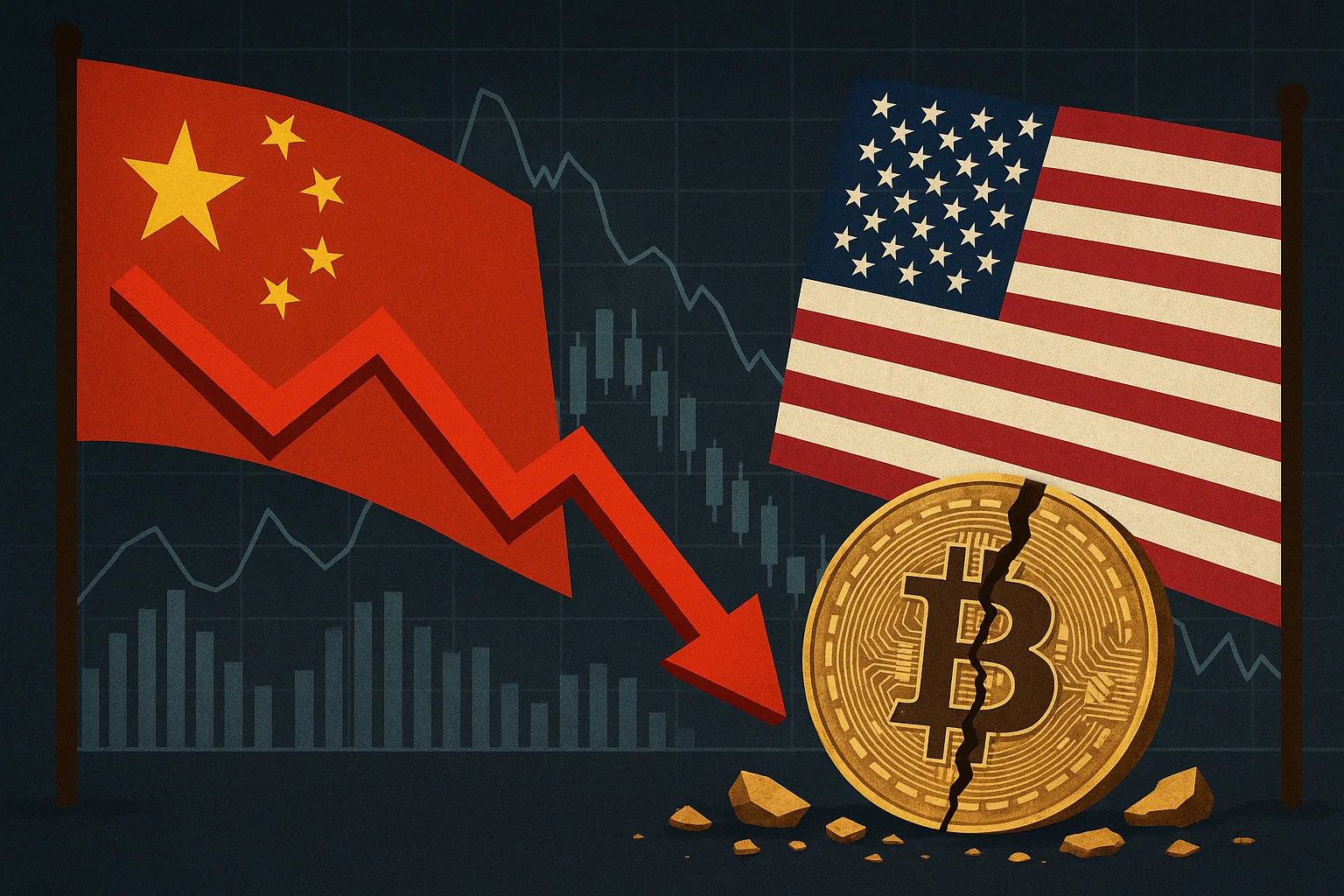
On October 10, 2025, cryptocurrency markets experienced a sharp decline after former U.S. President Donald Trump announced his intention to impose an additional 100% tariff on China, along with restrictions on software exports. These statements triggered a massive sell-off in high-risk assets, leading to billions of dollars in losses within just a few hours.
Technical Impacts on the Market
Liquidations of Futures Positions:
Large-scale liquidations were recorded in derivatives contracts, especially long positions. This strong liquidity pressure accelerated the price collapse, hitting lower-liquidity coins like Ripple and Dogecoin the hardest.
Volatility and Transaction Fees:
The sudden announcement unleashed a wave of random sell orders, increasing overall market volatility. Networks such as Ethereum saw a surge in transaction (gas) fees due to transaction congestion, negatively affecting retail traders.
Flight to Safe-Haven Assets:
As U.S.-China trade tensions escalated, investors moved toward gold and government bonds as safe havens, reinforcing capital outflows from the crypto market.
Breaking Psychological and Technical Support Levels:
The price decline broke through major support lines, triggering stop-loss orders and amplifying the sell-off. Investor sentiment played a key role, as confidence was lost rapidly, worsening the negative momentum.
This incident demonstrates how unexpected political statements can violently shake cryptocurrency markets. The digital asset space, heavily reliant on confidence and risk appetite, remains highly vulnerable to external shocks—especially when tied to global economic and geopolitical tensions.