At a time when geopolitical tensions are rising across the region, and some attempt to paint a bleak picture of the future of Gulf economies, the United Arab Emirates stands out as a different model—one that reflects an exceptional ability to adapt, grow, and turn challenges into real opportunities.
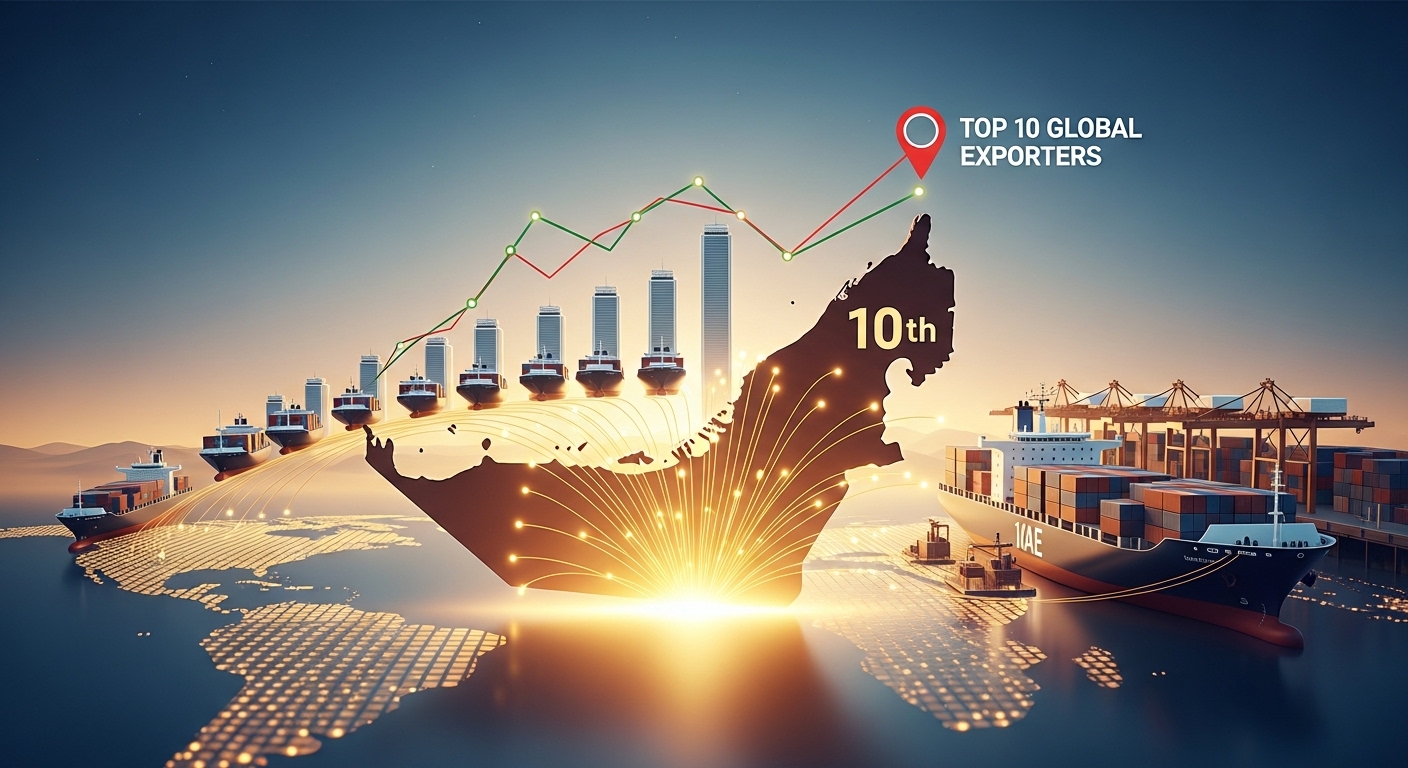
While narratives of economic slowdown or decline continue to circulate, international data confirms that the UAE economy is not only moving steadily forward, but is also making significant leaps that strengthen its position on the global economic map. For the first time, the country has entered the list of the world’s top ten exporters of goods—an achievement that reflects the depth of its ongoing economic transformation.
This progress is not a temporary development, but the result of rapid growth in foreign trade, which has reached historic levels exceeding AED 6 trillion. This growth has been driven by the expansion of both oil and non-oil exports, alongside the strong performance of the services sector.
The remarkable growth in services trade, which surpassed AED 1.14 trillion for the first time, highlights the country’s success in building a diversified economy that does not rely on a single resource. Instead, it is anchored in strategic sectors such as financial services, logistics, technology, and tourism—sectors that have proven resilient even under the most challenging global conditions.
In addition, the significant rise in non-oil trade, which reached AED 3.8 trillion, reflects the success of economic policies aimed at boosting domestic production and enhancing the global competitiveness of UAE exports. This confirms that the post-oil phase is no longer just a future vision, but an established economic reality.
Amid these indicators, the trade surplus emerges as further evidence of economic strength, recording notable growth to exceed AED 584 billion. This reflects the dominance of exports over imports and the country’s ability to maintain sustainable economic balance.
Despite the challenges facing the global economy, including expectations of slower international trade growth due to geopolitical tensions and rising energy prices, the UAE model demonstrates that proactive planning, diversified trade partnerships, and investment in infrastructure and technology can effectively mitigate the impact of crises.
What is unfolding today reflects a clear reality: economies built on diversification, openness, and flexibility are not easily shaken by external pressures—in fact, they often emerge stronger. In this context, the UAE presents an advanced economic model that is redefining the concept of stability in a region full of challenges.
While some continue to focus on scenes of tension, the country is steadily strengthening its position as a global hub for trade, investment, and services, proving that long-term strategic vision can rise above noise and deliver tangible results.
Ultimately, these economic indicators are more than just numbers—they tell an ongoing success story, confirming that the UAE is not weakened by crises as some claim, but rather redefines them and leverages them for further growth and global expansion.