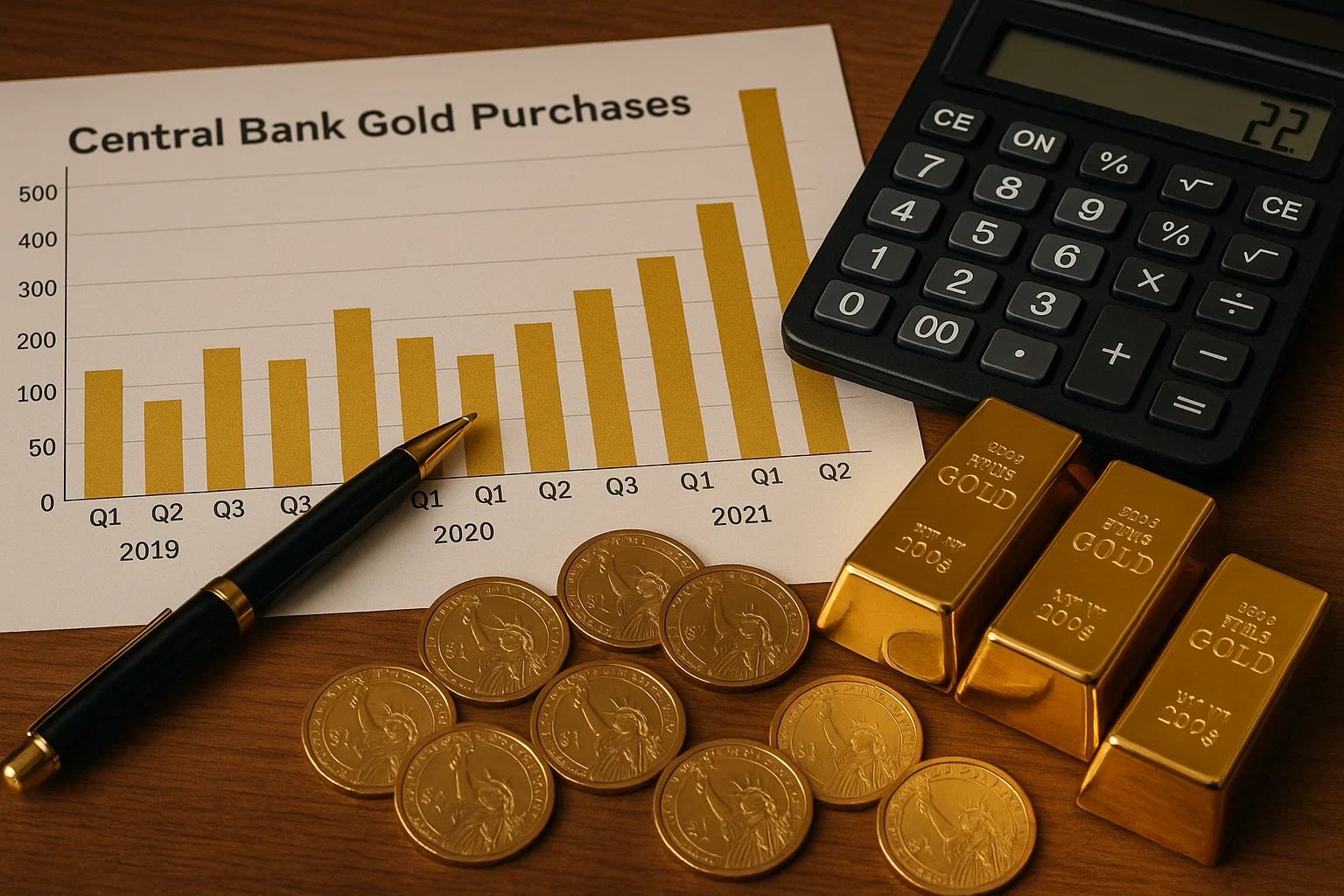
A report released by the World Gold Council on Tuesday revealed that net purchases of gold by central banks in April totaled just 12 tonnes—a 12% decline from March and significantly below the 12-month average of 28 tonnes per month. This unexpected drop has sparked questions about whether the continued rise in gold prices is starting to affect the pace of buying, or if it’s merely a temporary slowdown in a long-term strategic path.
According to Krishan Gopaul, Senior Analyst for Europe, the Middle East, and Africa at the World Gold Council, this decline may be partly attributed to the sharp rise in gold prices since the beginning of the year. While central banks are typically less sensitive to short-term price movements, the record-high levels of gold may have prompted some temporary caution—especially if some portfolios have neared their target allocation for gold reserves.
Gopaul emphasized that monthly gold purchase data tends to be highly volatile and that April’s slowdown should not necessarily be seen as a shift in long-term strategy. He added, “We still expect continued buying, particularly amid rising geopolitical tensions and growing concerns about global economic volatility.”
Poland Leads the Pack
Despite the overall slowdown, Poland topped the list of gold buyers in April, adding 12 tonnes to its reserves, bringing its total to 509 tonnes—surpassing the European Central Bank’s gold holdings. Since the start of the year, Poland has ramped up its acquisitions by 61 tonnes, reflecting a clear policy of strengthening its gold reserve position.
Notable Moves from European and Asian Banks
The Czech National Bank continued its gold purchases for the 26th consecutive month, adding 3 more tonnes in April and raising its total reserves to 59 tonnes. Meanwhile, the People’s Bank of China added 2 tonnes, bringing its total purchases for the year to 15 tonnes—part of a broader Chinese strategy to diversify reserves away from the U.S. dollar.
Central banks in Turkey and Kyrgyzstan each added 2 tonnes as well, while Kazakhstan and Jordan increased their gold reserves by approximately 1 tonne each, signaling a continuing upward trend in several emerging markets.
Uzbekistan Moves in the Opposite Direction
In contrast, Uzbekistan continued to reduce its gold reserves, selling 11 tonnes in April—the third consecutive month of such sales. This brings its total net reduction for the year to 26 tonnes, a clear deviation from the general trend among other central banks.
India Holds Steady, Increases Local Storage
The Reserve Bank of India maintained its gold reserves at 880 tonnes in April. However, its semi-annual report revealed a slight increase in the volume of gold stored domestically—a move reflecting India’s effort to reduce reliance on foreign storage and strengthen the strategic security of its reserves.
Growing African Interest in Gold
Several African central banks have announced plans to increase their gold reserves. Namibia’s central bank intends to raise gold to 3% of total reserves, citing the global trend and the metal’s strategic value as a hedge against inflation and a buffer during economic crises.
In Rwanda, the central bank is preparing to build up gold reserves as a new investment asset to bolster stability amid market fluctuations, with purchases expected to begin in the new fiscal year starting July.
Uganda’s central bank governor, Michael Atingi-Ego, told Bloomberg TV in May that they aim to diversify reserves by purchasing locally mined artisanal gold for use in managing repurchase agreements in foreign exchange markets.
Madagascar also plans to buy 4 tonnes of gold as part of a broader initiative to strengthen reserves and regulate gold exports, while the Kenyan central bank expressed interest in including gold in its reserves—though no specific timeline has been set.
Despite the slight dip in gold buying during April, central banks worldwide remain on a long-term trajectory that reflects growing confidence in gold as a hedge against economic and geopolitical risks. Countries like Poland, China, and the Czech Republic continue to build their reserves strategically, while Africa emerges as a new frontier in the global gold reserve landscape. While the recent slowdown is noteworthy, it does not alter the broader trend, which remains in favor of the precious metal.