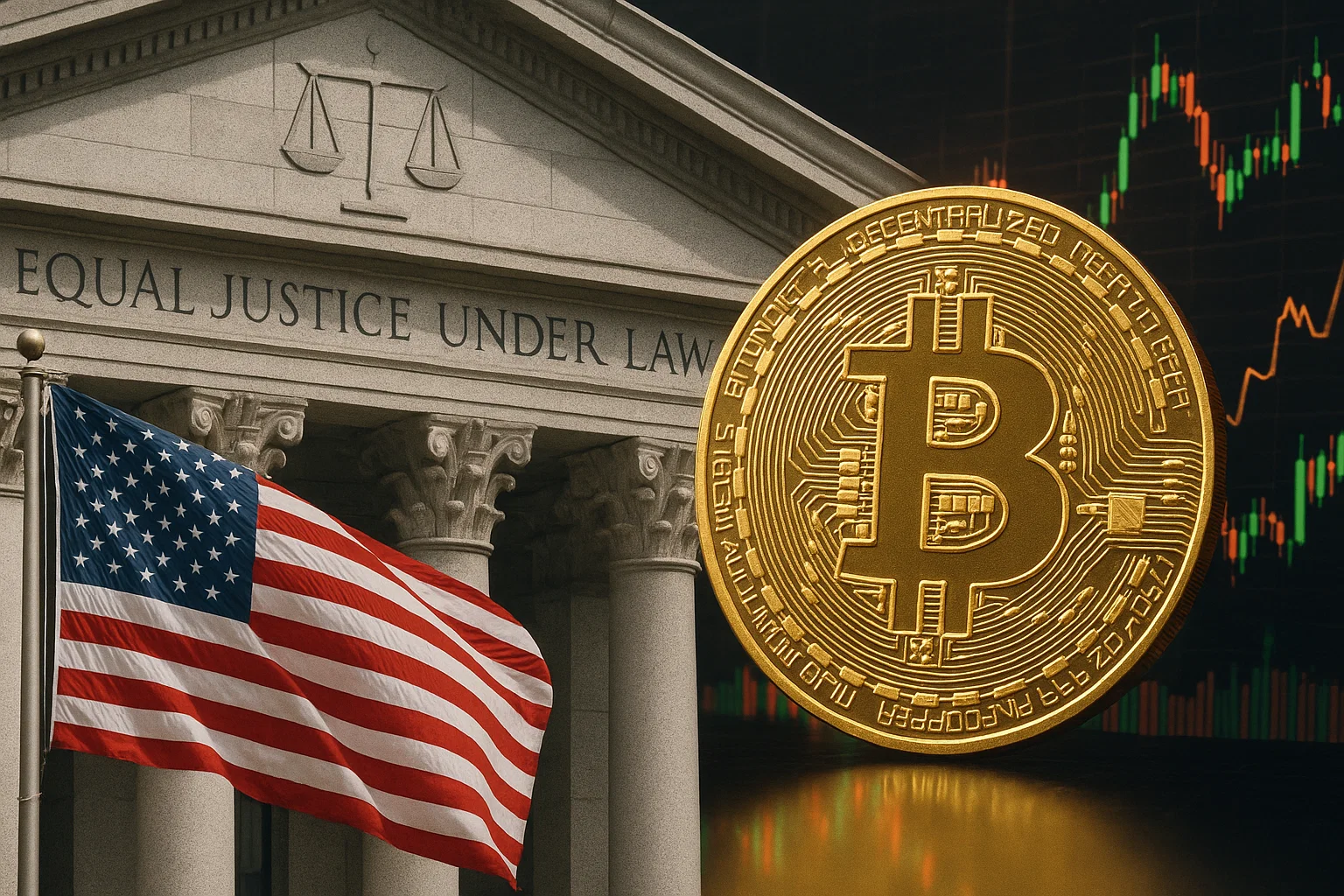
In a significant legal development that sparked wide reactions in financial markets, the U.S. Court of International Trade ruled that current President Donald Trump exceeded his constitutional authority when imposing broad tariffs on key trading partners. The court gave the president 10 days to comply with the ruling, opening the door to a wave of expectations and speculation in the markets.
General Context: Financial Markets and Initial Reaction
Although the ruling triggered a wave of optimism and boosted risk appetite among investors—especially in equities and high-risk assets—cryptocurrencies, led by Bitcoin, did not keep up with the momentum to the same extent.
Bitcoin’s performance lagged behind stock markets, signaling a cautious sentiment prevailing in the crypto market. This is despite the fact that crypto assets had previously benefited from periods of political and economic uncertainty. It appears that the indirect connection between cryptocurrencies and tariff policies played a role in this relative underperformance.
The White House Appeals – Uncertainty Persists
The White House responded swiftly by appealing the ruling, bringing political uncertainty back to the forefront. This complex legal situation, which may drag on for some time, puts the markets between the hammer of tariffs and the anvil of unpredictable trade policies.
According to analysts, any future ruling in favor of President Trump would likely lead to the reinstatement of high tariffs, potentially placing downward pressure on markets in general, and on cryptocurrencies in particular, by undermining investor confidence and deterring risk-taking.
Why Didn’t Bitcoin Benefit Directly From the Ruling?
Despite the political and economic weight of the court decision, cryptocurrencies are not directly linked to tariff policies—a characteristic that has distinguished this asset class in recent years. In fact, this relative detachment allowed Bitcoin to gain ground during earlier periods of trade uncertainty, such as in early 2025 when unexpected tariffs were imposed by the Trump administration.
However, the current development is different. It comes as a correction attempt to past policies, and with fears of legal and political escalation, crypto markets remained cautious, waiting for more clarity.
The Bigger Driver: Optimism Over Crypto-Friendly Regulation
On the other hand, Bitcoin’s recent record-breaking rally—reaching over $112,000 in May—was not driven by trade or tariff developments, but rather by growing optimism over more crypto-friendly regulations under President Trump’s administration, especially as a stablecoin regulation bill is currently advancing through the U.S. Congress.
This regulatory factor has had a more significant impact on the trajectory of cryptocurrencies than tariff issues, as it defines the legal environment in which these assets operate and provides investors with a clearer framework for compliance and trust.