Key Takeaways
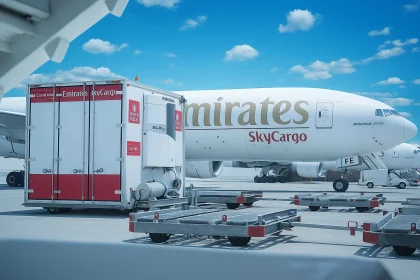
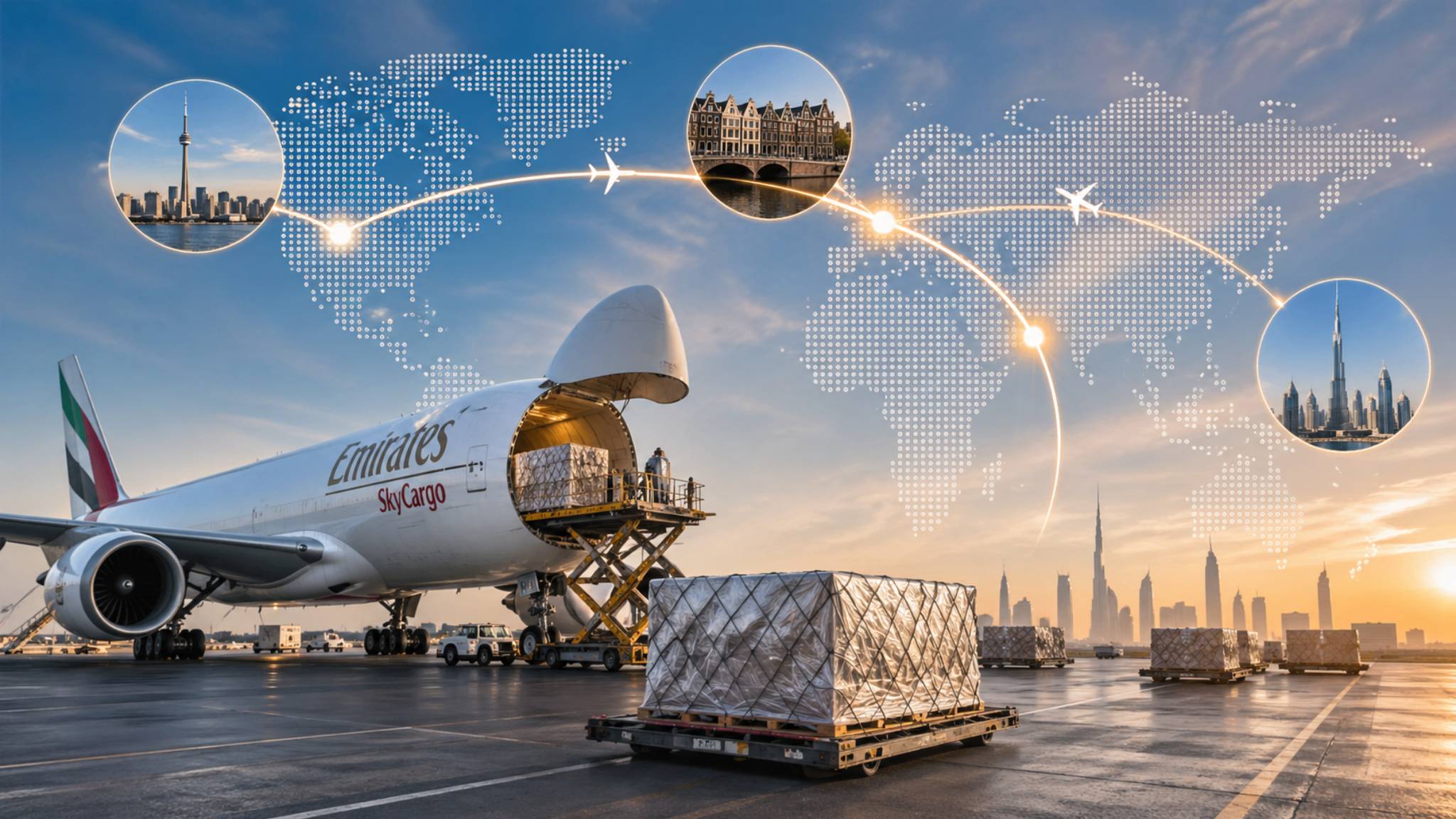
- In a move that reflects the rapid evolution of global supply chains, Emirates SkyCargo has launched a new air freight service connecting Dubai, Amsterdam, and Toronto.
- This new service goes beyond simply adding another destination.
- It establishes a structured cargo corridor that enhances flexibility in the movement of goods between three major economic regions.
In a move that reflects the rapid evolution of global supply chains, Emirates SkyCargo has launched a new air freight service connecting Dubai, Amsterdam, and Toronto. The route introduces up to 100 tonnes of additional weekly cargo capacity through a dedicated freighter, creating a direct logistics bridge across the Middle East, Europe, and North America.
This new service goes beyond simply adding another destination. It establishes a structured cargo corridor that enhances flexibility in the movement of goods between three major economic regions. By routing through Amsterdam, shipments can be redistributed efficiently across European markets, while also maintaining strong connectivity to Canada and the Gulf. This allows businesses to adapt more quickly to changing demand and optimize their supply chains.
A key highlight of the launch is that the new capacity is being added on top of existing cargo space available on passenger flights. This indicates a clear increase in demand for air freight, particularly for high-value and time-sensitive goods. Sectors such as pharmaceuticals, electronics, and perishable products rely heavily on reliable air cargo services. In addition, the continued growth of e-commerce has significantly increased the need for fast and efficient global delivery networks.
Amsterdam’s role in this corridor is strategically important. As one of Europe’s leading logistics hubs, it offers advanced infrastructure and strong connectivity across the continent. This transforms the route into a three-way trade channel, enabling smoother and faster cargo flows between Europe, North America, and the Middle East.
On a wider scale, the launch reflects a broader shift in global trade patterns. Companies are increasingly focusing on building more resilient and flexible logistics networks, reducing dependence on traditional routes. In this context, Dubai continues to strengthen its position as a global logistics hub, benefiting from its strategic location and advanced infrastructure.
The impact of this development extends beyond aviation. Increased cargo activity is likely to drive demand in sectors such as warehousing, logistics services, and industrial real estate. As trade volumes grow, so does the need for efficient storage and distribution solutions.
Overall, the new route highlights how air cargo competition is evolving. Success is now defined not just by network size, but by efficiency, connectivity, and the ability to support global trade with speed and flexibility.
Sources