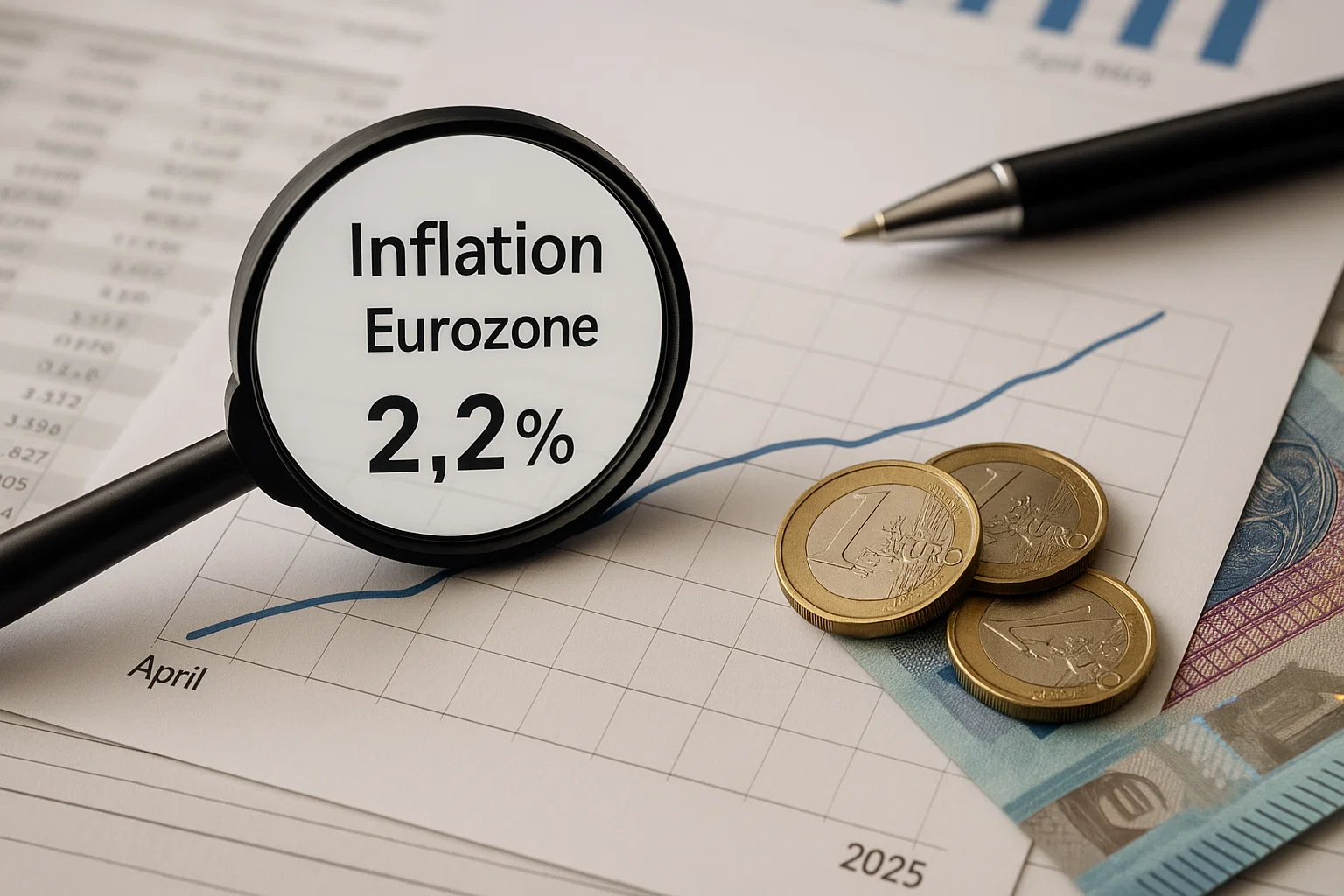
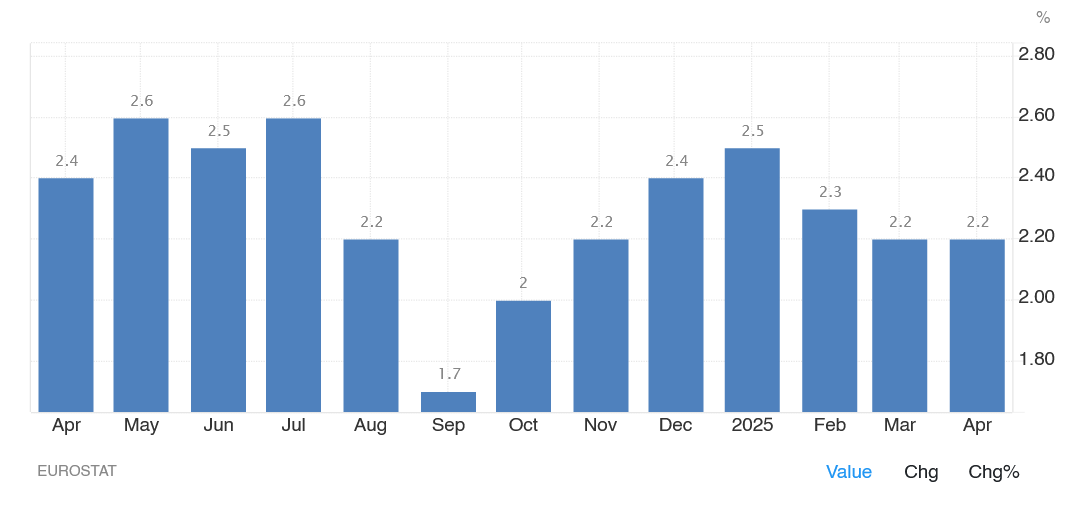
Official data has confirmed that the annual inflation rate in the Eurozone remained steady at 2.2% in April 2025, staying close to the European Central Bank’s medium-term target of 2.0%, reflecting a relative balance in prices despite ongoing global economic challenges.
Services were the biggest contributor to this increase, adding +1.80 percentage points, followed by food, alcohol, and tobacco at +0.57 p.p., and non-energy industrial goods at +0.15 p.p. In contrast, energy had a negative impact, subtracting -0.35 p.p., indicating a continued year-on-year decline in energy prices.
Meanwhile, core inflation – which excludes volatile food and energy prices – rose to 2.7%, up from 2.4% in March, which had marked a three-year low. This increase is a key signal for policymakers as it reflects underlying inflationary pressures in the economy.
On a monthly basis, consumer prices increased by 0.6%, matching the rise recorded in March, suggesting a relative stability in the pace of monthly price growth.
Analysis and Outlook
The annual inflation rate remains close to the ECB’s target, which is relatively positive for the central bank as it balances its goals of controlling inflation and supporting economic growth. However, the rise in core inflation raises concerns about persistent price pressures in certain sectors, possibly prompting the ECB to maintain its cautious monetary policy stance without rushing to cut interest rates.
With some sectors slowing and energy prices declining, policymakers are likely to remain in a state of cautious observation over the coming months, focusing on upcoming data to determine the optimal path for monetary policy across the Eurozone.