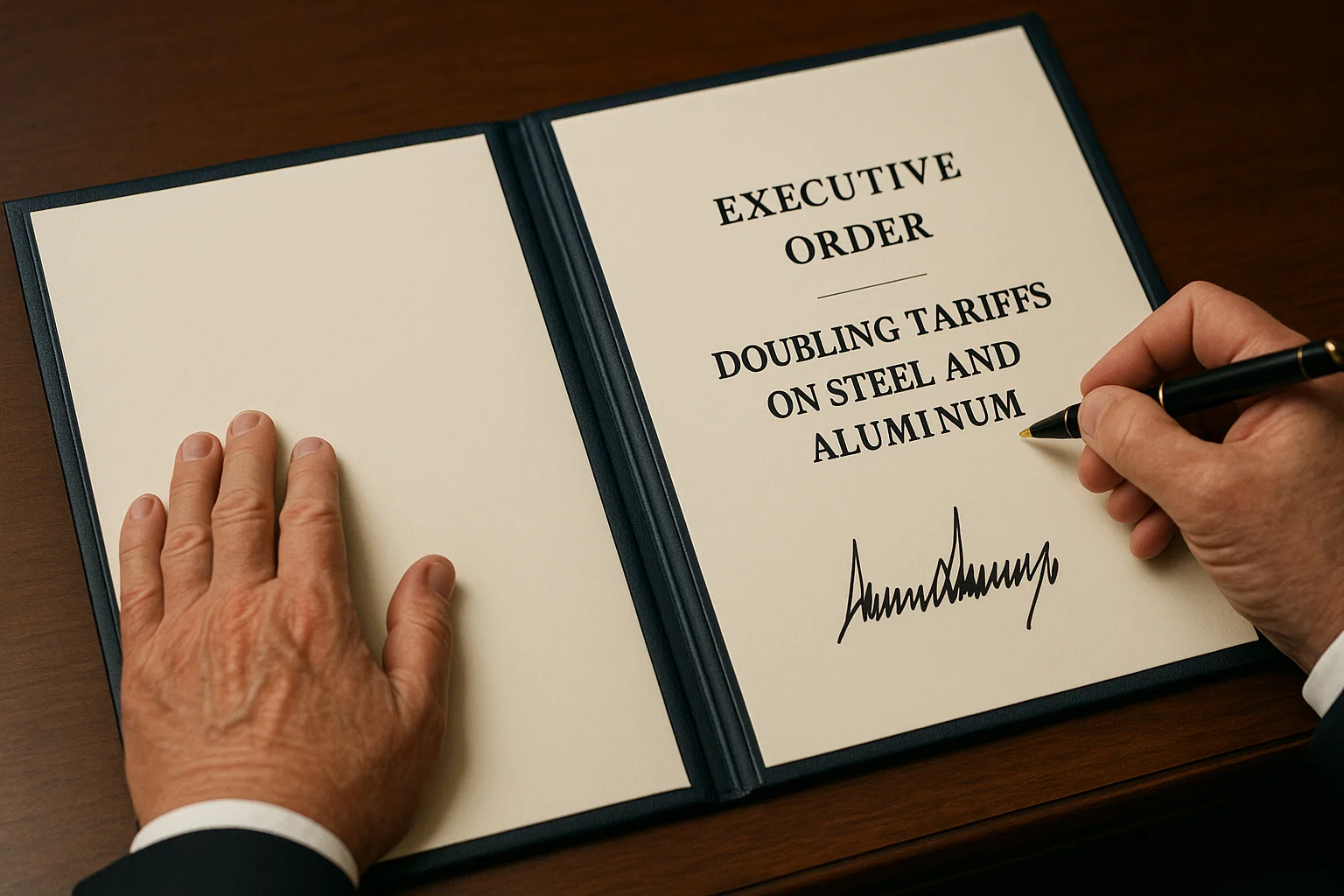
In a move reflecting an escalatory approach to U.S. trade policy, President Donald Trump has signed an executive order to double tariffs on imported steel and aluminum, raising them from 25% to 50%. The decision was officially announced by White House spokesperson Karoline Leavitt during a press conference held on Tuesday.
This step aligns with Trump’s long-standing protectionist stance throughout his presidency. He had revealed his intention to implement this measure last Friday, prompting immediate reactions in the markets. U.S. steel and aluminum prices saw a significant rise at the beginning of Monday’s trading session, while shares of foreign steel manufacturers dropped in response to the anticipated move.
The signing of the executive order marks a pivotal moment, as it formalizes the decision and authorizes U.S. customs officials to immediately enforce the increased tariffs. This action is expected to bolster the competitiveness of domestic products in the American market, but it may also open the door to escalating trade tensions with exporting countries—especially those that rely heavily on the U.S. as a key market for their metals.
The decision is also likely to draw criticism from America’s trade partners and international trade organizations, which may view it as a breach of free trade principles and a potential trigger for retaliatory trade disputes.
Amid these developments, the central question remains: Will this move revive the American manufacturing sector as Trump intends, or will it ignite a chain reaction of economic responses that could harm U.S. interests in the long run? Only time will tell.