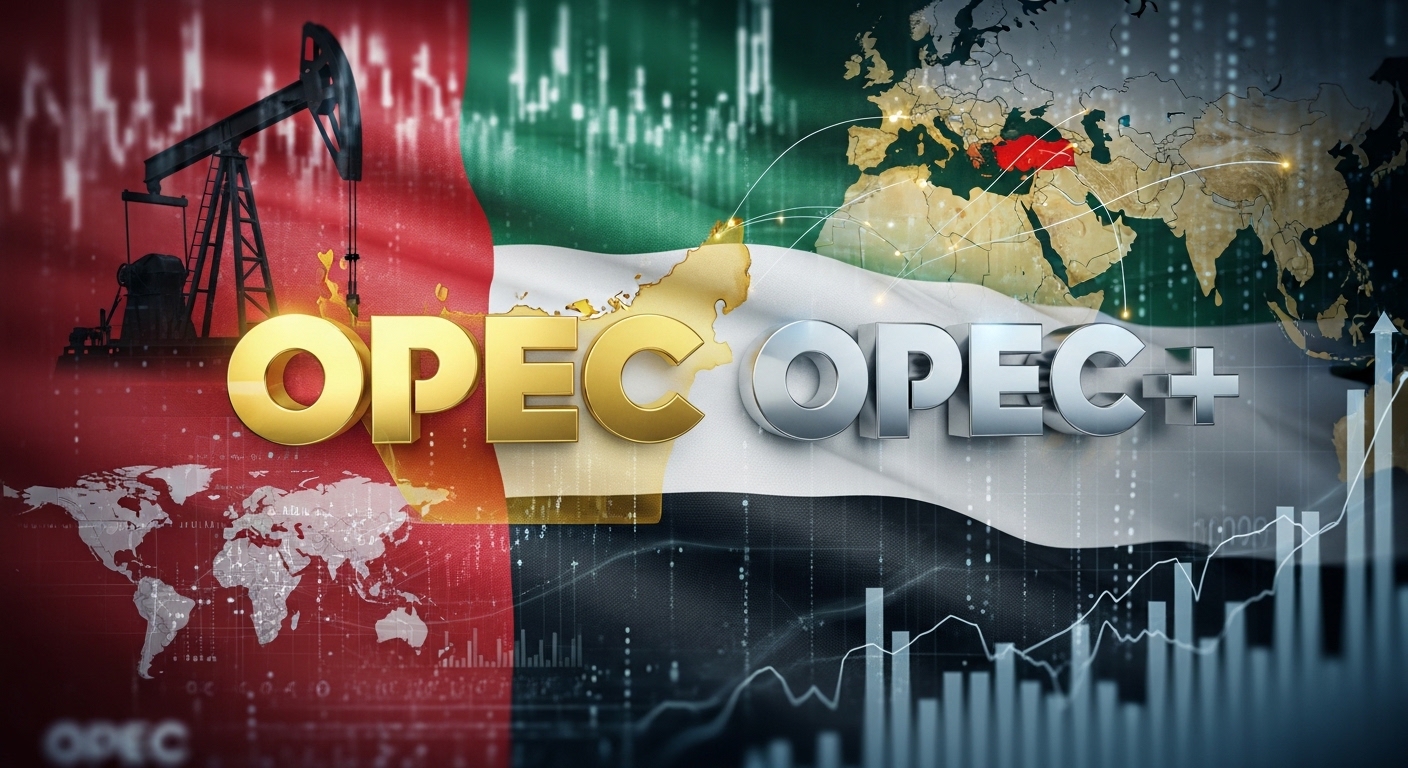
In a move that reflects strategic maturity and a calculated shift in its economic path, the United Arab Emirates has announced its decision to exit OPEC and OPEC+, effective May 1, 2026.
This decision follows a thorough review of the country’s production policies and future capabilities. It should not be seen as a step away from the global energy system, but rather as a smart repositioning that gives the UAE more flexibility and allows it to adapt faster to changes in energy markets.
Since joining OPEC in 1967 through Abu Dhabi, the UAE has played an important role in supporting oil market stability and encouraging cooperation among producers. For decades, it worked within a collective system aimed at balancing supply and demand. However, global changes—including rising demand and geopolitical challenges—now require more flexible and independent decision-making.
The timing of this decision is significant. The world is going through major shifts in energy, with continued reliance on oil and gas, while investments in clean and renewable energy are rapidly increasing. The UAE is positioning itself as a reliable and responsible energy producer, capable of meeting global demand efficiently without being limited by fixed production frameworks.
Economically, the move shows strong confidence in the UAE’s production capacity. The country has invested heavily in infrastructure and efficiency, allowing it to increase output gradually and in line with market needs. This creates new opportunities for growth and revenue.
More importantly, the decision supports the UAE’s long-term vision to diversify its economy and reduce dependence on oil. Energy is just one part of a broader system that includes technology, tourism, finance, and industry. Greater flexibility in energy policy will positively impact the overall economy.
There is also a geopolitical angle. With ongoing tensions in key regions like the Strait of Hormuz, major producers need more independence and agility. By stepping away from group production quotas, the UAE gains the ability to act based on its own market assessment.
Despite this exit, the UAE has confirmed its commitment to global market stability and continued cooperation with partners. This reflects a balanced approach—combining independence with responsibility.
The decision also sends a strong message to international investors: the UAE remains committed to developing its energy sector with clear policies and a stable, attractive investment environment.
In summary, the UAE’s exit from OPEC and OPEC+ is not a withdrawal, but a forward-looking step. It strengthens flexibility, supports sustainability, and aligns national interests with global market needs. It marks the beginning of a new phase—one driven by confidence, strategy, and long-term vision.