Some numbers go beyond statistics. They reflect the nature of an entire country. What has been tracked by FlightRadar24 in recent weeks is not just a typical sector rebound. It is a clear expression of the UAE’s economic identity, its ability to absorb shocks, its pragmatic response, and its confidence in restarting momentum.
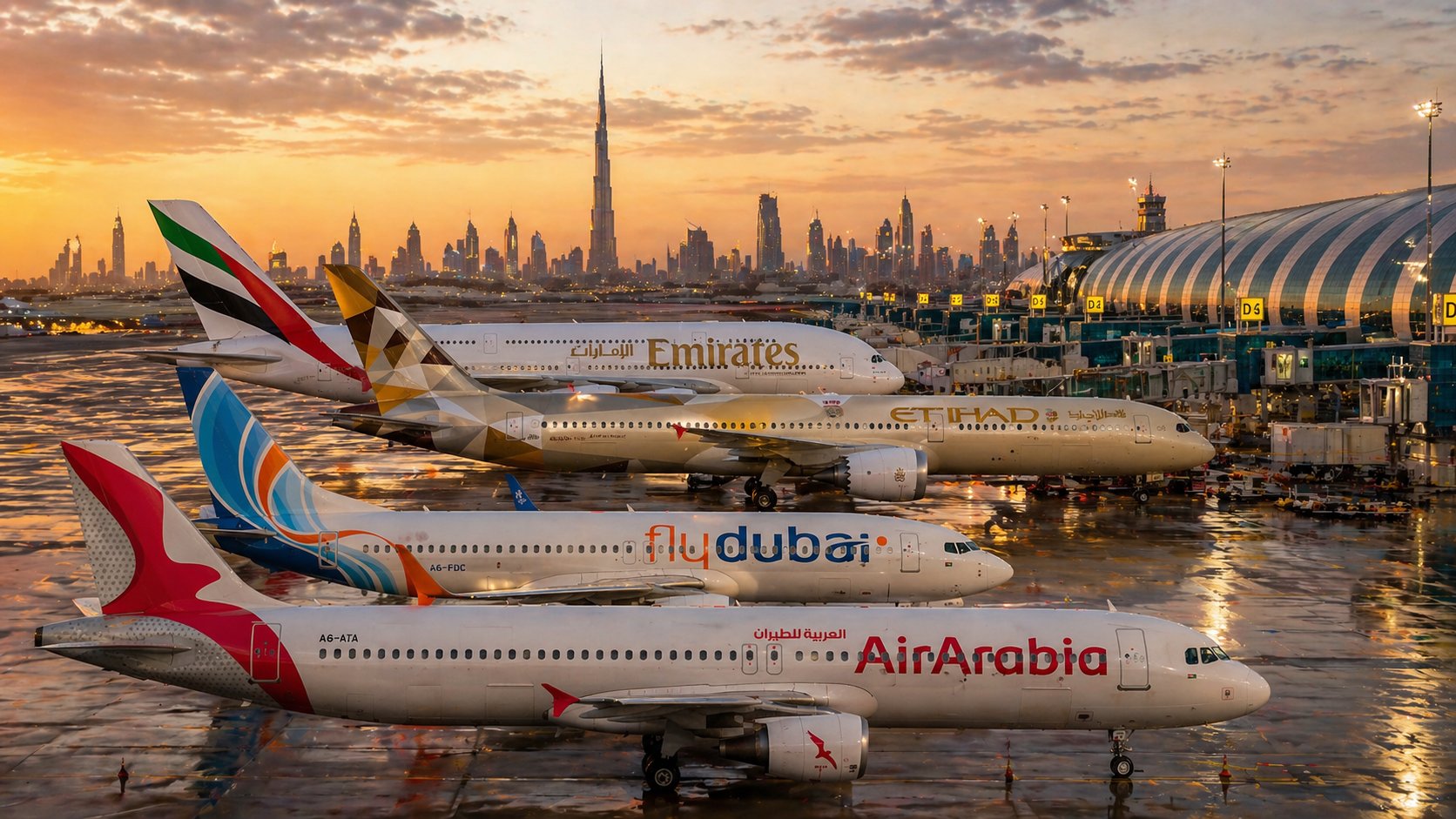
During the week of April 19 to 25, 2026, the UAE’s four airlines, Emirates, Etihad Airways, flydubai, and Air Arabia, operated a total of 6,825 flights. On its own, that number may not seem extraordinary without context. But when compared to the first week of March, at the peak of regional disruptions, when only 2,196 flights were recorded, the scale of recovery becomes clear. A net growth of 210 percent in less than two months.
A thousand flights in one day
On April 23, a significant symbolic milestone was reached. For the first time since the crisis began, UAE carriers surpassed 1,000 flights in a single day, recording 1,015 flights according to FlightRadar24’s Gulf airline recovery index. For comparison, just before the disruptions on February 27, daily flights stood at 1,513. This means the sector regained nearly 67 percent of its full operational capacity within weeks, not months.
The breakdown of performance that day is equally telling. Emirates led with 410 flights, crossing the 400 flight mark for the first time since the crisis and approaching 80 percent of its previous capacity. It was followed by Etihad with 229 flights, Air Arabia with 190, and flydubai with 186.
Structural strength, not temporary luck
What sets this recovery apart from others in the region is that it is not accidental. It is the result of a well designed aviation ecosystem. The UAE does not simply operate airlines. It runs an integrated system of multiple airports, pre approved alternative air corridors, and operational management capable of rescheduling hundreds of flights in record time. When surrounding airspaces closed, the UAE did not pause. It redrew the map.
Emirates alone is currently operating flights to 125 out of its usual 140 destinations, around 89 percent of its global network, even if some routes run on reduced schedules. Etihad is operating more than 80 destinations across six continents from Abu Dhabi.
While many regional and international airlines faced strict limitations, some restricted to one round trip per day until the end of May, UAE carriers increased frequencies and restored routes faster than expected. This gap in performance is not random. It reflects decades of investment in building aviation infrastructure designed not just to serve local demand, but to position the UAE as an essential global transit hub connecting East and West.
The reopening of Hamad International Airport in Doha added further momentum to the sector. flydubai was among the first to resume flights to Doha on April 21, followed by Air Arabia on April 22. This reflects regional confidence in UAE carriers as leaders in the phase of aviation recovery.
Meanwhile, Tim Clark, President of Emirates, stated during the CAPA Airline Leaders Summit in Berlin that he had no concerns about losing market share. He expressed full confidence that strong demand would enable Emirates and Dubai to quickly rebound from any impact of the regional conflict. This confidence was not abstract. It was backed by numbers already taking shape.
From 2,196 flights to 6,825 in less than two months.
This is not just a statistic. It is the UAE’s answer to doubt.